Jamaican Food Centennial and the Story of National Flavor
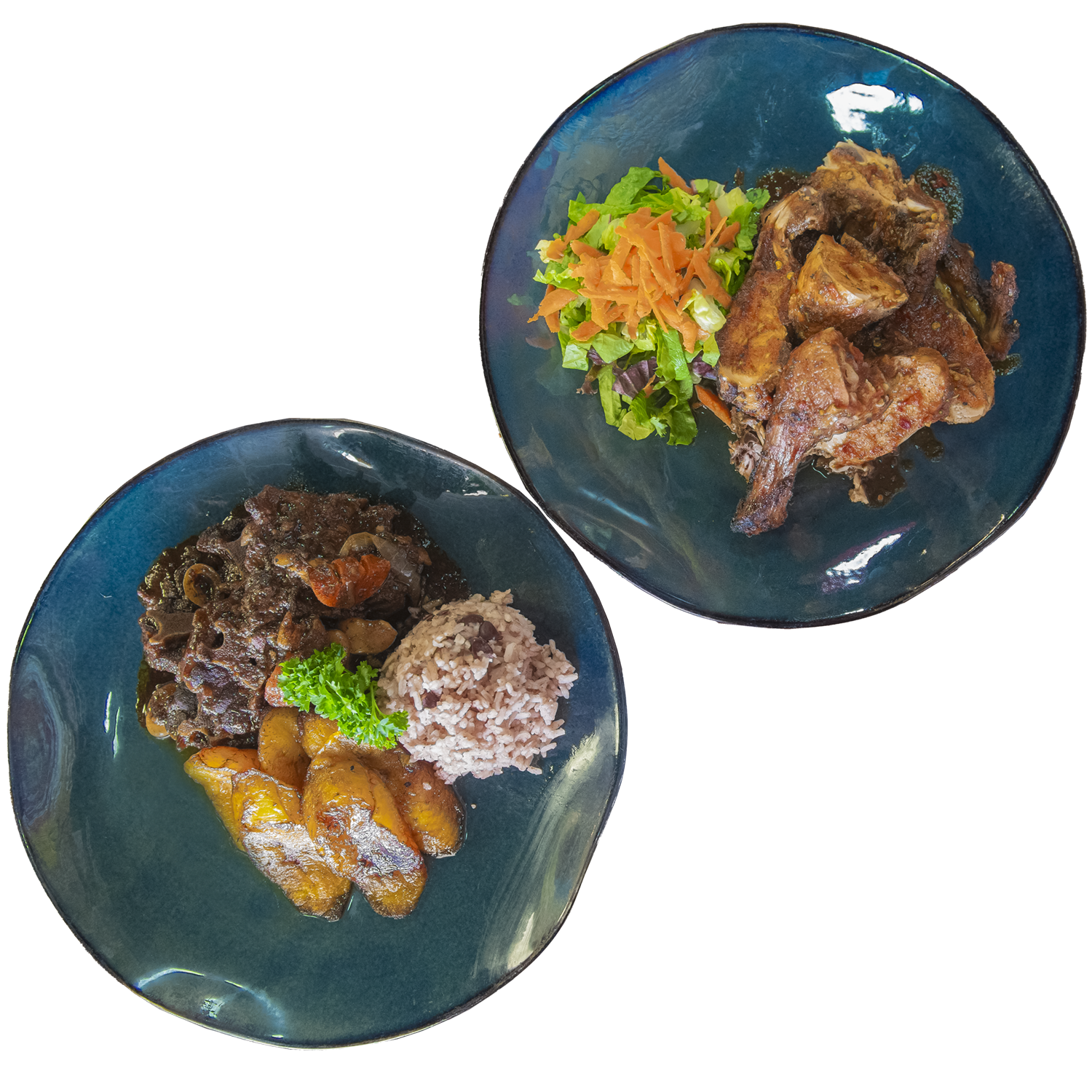
A centennial is a useful way to look at food. Not because a nation’s cooking begins neatly on one date, and not because flavor respects anniversaries, but because a hundred-year span reveals what shorter snapshots miss. Over a century, ingredients rise and fall in importance, home kitchens absorb the pressures of migration and price shocks, restaurant food starts speaking back to memory, and dishes that once marked class or region become symbols of the whole country. When people talk about a Jamaican food centennial, they are really talking about that long arc, the making of a national palate through labor, trade, hardship, celebration, and invention.
Jamaican food did not become “Jamaican” in one moment. It gathered itself gradually. It took shape in provision grounds, market stalls, rum shops, Sunday dinners, fishing beaches, Chinese groceries, Indian curry pots, Rastafari ital kitchens, school canteens, and hotel buffets. It was refined by women stretching limited household budgets, by men tending pit fires before dawn, by farmers deciding which yam or pepper variety would survive another season, and by migrants carrying taste memory from parish to parish and then across oceans.
That is why national flavor is never just a recipe list. It is a social record. In Jamaica, that record has unusual richness because the island’s foodways were formed under intense historical pressure. Indigenous knowledge, colonial extraction, African survival and adaptation, indentured migration from India, Chinese entrepreneurship, Syrian and Lebanese trading networks, British institutions, American influence, tourism, and the modern diaspora all left marks on the table. Some of those marks are obvious. Others live in technique rather than ingredient, or in habit rather than headline.
A hundred years in the pot
If you take the last hundred years as your frame, the first thing you notice is continuity under change. Ackee and saltfish remains a national shorthand, yet the way it is sourced, prepared, and served has changed dramatically. Jerk still carries the aura of smoke, pimento, and fire, but the jerk sold at a roadside pan in Portland is not exactly the jerk plated in a Kingston dining room or exported as a bottled marinade for supermarket shelves abroad. Curry goat still arrives at weddings and funerals with the authority of ritual, but the curry powder itself reflects older Indo-Caribbean adaptation rather than a fixed Indian original.
This matters because national cuisines are often flattened into mascots. Jamaican food especially suffers from that abroad. Outside the island, it is often reduced to three or four dishes, a bright Scotch bonnet logo, and a soundtrack. Real Jamaican cooking is more granular. It is deeply regional, seasonally responsive, and shaped by economics in ways visitors often miss.
Spend enough time around Jamaican kitchens and you learn that the ingredients tell one story, while the starch tells another. Rice and peas may be the Sunday star, but ground provisions speak even more plainly about continuity: yam, green banana, coco, dasheen, breadfruit, and boiled dumpling have carried generations through lean years and busy workdays. These foods are practical, filling, and tied closely to local agriculture. They also reveal a long-standing preference for meals that satisfy fully rather than perform delicacy. National flavor in Jamaica has often been built from food that had to nourish before it could impress.
Before “national cuisine” came necessity
Long before anyone used heritage language to describe it, Jamaican food was structured by necessity. Plantation economies did not exist to feed local people generously. Enslaved Africans and, later, poor rural communities had to make abundance out of what was available, cultivable, or saleable. That pressure shaped one of the defining strengths of Jamaican cooking: its talent for extracting depth from limited means.
You see it in soup. A proper Saturday soup can be so complete that it feels like a thesis on thrift and pleasure at the same time. Pumpkin, yellow yam, cho cho, carrots, dumplings, thyme, scallion, and a piece of meat if the budget allows, all working together until the broth tastes bigger than any one ingredient. You see it in rundown, where coconut milk does more than enrich. It binds, softens, and carries seasoning through fish or mackerel in a way that feels both coastal and frugal. You see it in mannish water and red peas soup, where cuts and textures others might dismiss become the whole point.
There is hard judgment behind these dishes. Timing matters. So does salt. So does when to add the thyme, whether the coconut milk should split slightly, how much pepper should perfume a pot without taking over, and when to let smoke lead rather than spice. These are not casual decisions. They are the work of cooks trained by repetition, memory, and correction. Anyone who has watched an older Jamaican cook refuse to measure yet insist on exactness knows how much technique sits inside so-called simple food.
A centennial perspective sharpens this point. Over the last hundred years, formal culinary recognition often arrived late, but practical mastery was always there. The country did not need external approval to know its food had structure.
The deep influences that never stopped moving
To talk honestly about Jamaican food is to resist tidy origin myths. Many signature foods emerged through mixing rather than purity. Ackee itself came from West Africa. Saltfish arrived through Atlantic trade networks. The pairing became local through use, preference, and repetition. Jerk is often treated as a singular symbol, yet it carries Indigenous and African histories in its methods and survival logic. Curry in Jamaica is inseparable from Indian indentured influence, but Jamaican curry became its own thing over time, brighter with allspice, scallion, thyme, and local pepper heat.
The Chinese contribution is often understated in broad public storytelling, though anyone familiar with twentieth-century Jamaican commerce and urban eating knows it mattered. Chinese Jamaican groceries, bakeries, and restaurants shaped access, taste, and habit. Soy sauce, fried rice, and chop suey did not remain foreign novelties. They entered everyday life, were adjusted, and became familiar in their own Jamaican registers. A patty shop beside a Chinese restaurant, or one business serving both, is not an oddity in Jamaica. It is history made practical.
British colonial influence remained visible too, especially in institutions, baking traditions, and certain festive habits. Bun and cheese around Easter carries traces of older forms while being unmistakably local in spice and texture. The Christmas table, with sorrel, fruit cake, ham, and gungo peas, shows how imported frameworks become naturalized through local ingredients and timing.
Then there is Rastafari, whose influence on Jamaican food reaches beyond ital restaurants or vegetarian menus. Rastafari helped reframe food as moral practice, natural practice, and political practice. Ital cooking elevated fresh produce, reduced reliance on processed goods, and made questions of purity, salt, flesh, and cultivation more public. Even Jamaicans who do not eat ital often speak about “natural” food in language shaped partly by that movement’s values.
The market as national archive
If you want to understand Jamaican flavor, go to a market before you go to a dining room. Coronation Market in Kingston, rural parish markets, roadside produce tables, and fish landings explain more about the cuisine than a polished menu ever can. The market shows what is in season, what is expensive, what has become scarce, and what households are negotiating in real time.
National cuisines are often romanticized as if ingredients arrive by cultural right. Markets expose the truth. Scotch bonnet prices rise. Proper yellow yam can be harder to find in the city than people expect. Breadfruit has seasons that shape menus more than branding does. Callaloo quality can vary sharply by rainfall and handling. Fresh fish depends on weather, fuel costs, and the practical realities of small-scale fishing. Over a hundred years, those pressures have repeatedly altered what Jamaicans cook most often, even while public identity clings to fixed dish names.
That gap between symbolic food and daily food is important. A tourist may think of lobster, escovitch fish, and jerk pork. A household deciding how to feed five people on a Tuesday may think in far humbler terms. National flavor lives in both spaces, but it is the everyday one that keeps a cuisine honest.
Why seasoning is the real language
People sometimes describe Jamaican food as “spicy,” which is true in only the broadest and least useful sense. Heat is present, but seasoning is the real language. The island’s cooking depends on layered aromatics rather than blunt force. Scallion, thyme, onion, garlic, ginger, pimento, black pepper, nutmeg, allspice, curry blends, and Scotch bonnet each play different roles. The point is not maximum aggression. The point is shape.
A well-seasoned brown stew chicken does not simply taste hot or salty. It tastes rounded. The browning deepens sweetness and color, the onion softens into the gravy, the thyme carries a herbal top note, and the pepper sits in the background until it does not. Escovitch works differently. Its sharpness should stay lively. Vinegar, onion, carrot, pimento, and pepper create contrast with fried fish rather than merger. Jerk goes in another direction again. There, smoke is as crucial as spice, and the pimento wood or leaves can make the difference between something pleasant and something unmistakably Jamaican.
These distinctions matter because they reveal national flavor as a set of judgments, not just a pantry. Two cooks can use near-identical ingredients and produce very different results depending on marinating time, fire management, jamaican food centennial cut size, and patience. In my experience, this is where outsiders most often misread the cuisine. They copy ingredient lists but miss the logic. Jamaican cooking rewards feel, sequence, and restraint as much as boldness.
Street food, bakery culture, and the democracy of appetite
A serious story of Jamaican food cannot stay in the formal meal. It has to account for what people eat on the move, between jobs, after school, before a long taxi ride, or late at night. Street food and bakery culture are central to the national palate because they democratize taste. They bring strong flavor to ordinary routines.
The patty deserves every bit of scholarly and popular attention it receives. It is one of the clearest examples of a food that crossed class lines without losing identity. Originally influenced by Cornish pastry forms and adapted through local spice preferences, the Jamaican patty became its own category. Beef remains the reference point for many people, but chicken, vegetable, soy, shrimp, and even more experimental fillings show how flexible the form can be. A good patty is not just about filling. The crust matters equally. It should be sturdy enough to hold, delicate enough to break cleanly, and seasoned enough to stand on its own. Too many export versions miss that last point and end up tasting like generic pastry with Caribbean branding.
Coco bread, hard dough bread, bulla, gizzada, toto, spice bun, and Jamaican pastries more broadly form another underappreciated chapter in the story. These foods bridge home, school, church, and commerce. They also illustrate how sweetness in Jamaica often leans toward spice and depth rather than frosting-heavy excess. Molasses, coconut, nutmeg, cinnamon, and mixed fruit carry memory in ways that feel almost ceremonial.
Street vending extends that memory into public life. Roast corn, roast yam, jerk pans, soup men, cane juice, peanut vendors, and fruit sellers all contribute to the sensory identity of place. The smell of pimento smoke at dusk, or soup being ladled on a Saturday roadside, is part of national flavor every bit as much as a celebrated restaurant plate.
Tourism changed the menu, but not always for the worse
No modern account of Jamaican food can ignore tourism. Over the past century, and especially from the mid-twentieth century onward, hotels, resorts, and visitor expectations shaped what dishes were emphasized, softened, or transformed for display. That process can feel reductive, and often is. Menus built for brief visits tend to favor recognizability over depth. Jerk, curried meats, fried fish, tropical fruit, and rum-based desserts become ambassadors, while less glamorous staples remain largely invisible.
Still, tourism’s impact is not only distortion. It also created economic incentives for preservation, standardization, and innovation. Some traditional techniques survived in part because visitors valued them. Some chefs used hotel training to refine presentation without abandoning flavor logic. Some small producers found markets for pepper sauces, coffee, rum, cassava products, and artisanal preserves that might otherwise have remained local only.
The trade-off is real. When food becomes performance, complexity can flatten. Heat gets adjusted downward. Dishes once tied to season or region become year-round menu fixtures, often with compromised ingredients. Yet tourism also pushed Jamaican cuisine onto the world stage, giving diaspora cooks and later generations more room to claim it proudly.
The key distinction is whether adaptation preserves internal logic. A jerk chicken sandwich on a resort menu can still make sense if the seasoning, smoke, and balance remain true. A glossy “Caribbean fusion” plate with random mango drizzle and no grounding in Jamaican taste usually does not.
Diaspora kitchens kept the memory warm
If the island is one archive of Jamaican food, the diaspora is another. Britain, Canada, the United States, and other migration destinations all became secondary homelands for Jamaican taste. In those places, cooks faced substitutions, climate differences, and supply limits. They adapted, sometimes reluctantly, sometimes brilliantly.
Ask anyone who grew up in a Jamaican household abroad about the lengths older relatives went to for proper ingredients. Barrels, suitcases, imported seasoning packets, frozen ackee, saltfish, pimento berries, and Scotch bonnet peppers carried emotional weight far beyond their price. A Sunday meal in London or Toronto could become a declaration that migration had not dissolved identity.
Diaspora cooking jamaican food centennial also changes the source cuisine over time. Restaurant versions abroad feed back into local expectations. Bottled jerk marinades, patty chains, and reggae-themed dining rooms shape how the world imagines Jamaica, and Jamaicans themselves respond to that mirror. Sometimes the feedback loop is productive. Sometimes it hardens clichés. But it is part of the centennial story all the same.
One striking feature of diaspora food culture is how often the starch and the side dishes become emotional anchors. Rice and peas, fried plantain, festival, boiled dumpling, and callaloo can matter just as much as the celebrated main. That is a clue about how memory works. People do not only miss headline dishes. They miss the textures of ordinary completeness.
What gets lost when a cuisine becomes a brand
The phrase jamaican food centennial invites celebration, but it also invites scrutiny. National flavor gains prestige over time, yet prestige can erase labor. There is a risk in turning cuisine into heritage theater without accounting for the people who maintain it under difficult conditions.
Farmers dealing with drought, flooding, pests, and input costs do not experience national cuisine as a logo. Fishers facing rough seas and fuel prices do not either. Market vendors rising before dawn, food sellers working over hot oil, and home cooks stretching groceries through the week carry the cuisine more directly than most cultural campaigns ever will.
Another risk is overstandardization. Once a dish becomes iconic, people begin policing it as if there were one true version. That rarely reflects reality. Jamaican cooking has always tolerated and even prized variation. One household’s rice and peas may be looser, another’s firmer. Some cooks put scotch bonnet whole in the pot for aroma, others split it for heat. Some escovitch gravies bite harder than others. Festival can run sweeter or less sweet. These are not signs of confusion. They are signs of a living cuisine.
A centennial view should make us less dogmatic, not more. The point is not to freeze Jamaican food at one ideal moment. The point is to understand how it endured while changing.
The future sits in the same old bowl
The strongest current in Jamaican food today is not novelty for its own sake. It is selective renewal. Younger chefs and food entrepreneurs are reexamining local ingredients, older methods, and neglected dishes with fresh technical confidence. Breadfruit flour, cassava products, artisanal pepper sauces, elevated market produce, coffee traceability, and more thoughtful farm-to-table relationships suggest a future that is modern without being rootless.
The most promising work often comes from people who respect both street wisdom and professional discipline. They know a menu description cannot rescue weak seasoning. They understand that presentation matters, but not at the expense of soul. They take local produce seriously enough to ask which variety, which parish, which season, which grower. That level of attention is not trendiness. It is maturity.
There are practical challenges ahead. Climate volatility affects crops and fisheries. Imported food still competes strongly with local staples. Younger generations may cook less frequently at home than their grandparents did. Land use patterns and urban pressure complicate agricultural continuity. Yet Jamaican cuisine has survived far harsher tests than changing restaurant fashions. Its resilience comes from its broad base. It lives in family practice, public commerce, ceremony, migration, and memory all at once.
That is why national flavor remains such a powerful idea in Jamaica. It is not merely taste. It is belonging made edible. A bowl of soup, a patty from a warm case, a piece of roast breadfruit with saltfish, a spoonful of rice and peas at Sunday dinner, these are not interchangeable comforts. They carry a century of adaptation and insistence.
When people mark a Jamaican food centennial, whether formally or simply in spirit, they are honoring more than famous dishes. They are honoring a method of survival that learned to season itself richly. They are honoring the cooks who made thrift taste generous, the migrants who protected flavor from distance, the vendors who fed working people reliably, and the farmers and fishers whose labor still underwrites the plate. Most of all, they are honoring a national cuisine that never needed to be static to be unmistakably itself.
That may be the clearest lesson of the last hundred years. Jamaican food became national not because it was pure, elite, or uniform, but because it was shared, argued over, adjusted, and loved. It absorbed history without surrendering character. Few cuisines tell that story with as much force on the tongue.
Reggae Pot Jamaican Grill
Address: 7562 S University Blvd C, Centennial, CO 80122
Phone number: +13039975623
FAQ About Jamaican Food Centennial
What is typical Jamaican food?
Typical Jamaican food features bold, vibrant flavors created by blending African, Taino, European, and Asian influences.
What is a famous Jamaican dish?
The most famous Jamaican dish is Ackee and Saltfish, which is the national dish of Jamaica.
What are the top 10 foods to eat in Jamaica?
AI Overview The top 10 traditional foods to eat in Jamaica are bold, flavorful dishes that mix local ingredients with global influences.